


As we approach Autumn, a gardener’s thoughts naturally turn to mulching and organic matter. In this blog, our Horticultural Technician, Meg Evans, reveals the wonders of this remarkable substance and how it can transform your garden through the colder months and beyond…
Organic and its many meanings
The word organic can refer to multiple things and can become quite confusing in the world of horticulture.
Organic growers focus on natural methods that promote healthy soil, biodiversity and long-term sustainability. Organic growing is a principle so can exist without certification, although certification does recognise that the system/product/garden has achieved the definition that the certification body has laid out. These definitions are based on internationally agreed definitions, typically in the UK the Soil Association standards are based on (and exceed) the requirements of the European organic regulations.
Although a product may contain organic matter, for example, a bag of Multi-purpose compost, this does not necessarily mean it’s organic. In this example, most Multi-purpose composts contain man-made fertilisers so could not therefore be classed as organic. A bag of compost will always contain organic matter, whereas it may not be organic certified.
Organic matter is derived from anything which was once living and is now decomposing. It can typically contain useful nutrients for plant, animal and microbial growth.
Why is organic matter important for plants and soil systems?
Organic matter can directly and indirectly impact the growth and development of plants. Good soil is a key component to healthy plants, and if soil structure is poor, and the soil is waterlogged or won’t hold water at all, this will affect the health of any plants growing in it. Organic matter improves structure, which in turn improves water retention and water infiltration, as well as creating a more permeable and friable soil. Organic matter also feeds microbes and all the tiny creatures involved in a soil system to keep the soil environment healthy and full of life.
It’s helpful to visualize what healthy soil consists of to understand the importance of balancing each different sized component of soil, to create habitable pores in between soil particles for microorganisms, air, water and growing plant roots.
Healthy soil composition can consist of between 20-30% water and 20-30% air, around 45% mineral matter (sand, silt and clay), and around 5% organic matter. Considering this, an example of a compacted soil composition could contain 75% mineral matter, 17% air, 6% water and 2% organic matter. With such little air and water, plant roots will be unable to respire, and microbial activity will plummet for the same reason, promoting bacteria (primarily anaerobic – surviving without air) to colonize the small pore spaces left in between soil particles. Bacteria can easily move between very wet, condensed and clogged pores, whereas vital microorganisms promoting plant growth through nutrient cycling and decomposition (such as amoebas, nematodes, fungal hyphae and spores and mycorrhizal hyphae) will be unable to squeeze into the pores and inhabit the area.
The main culprit for compacted soil comes from a high portion of clay. Organic matter helps break up clay particles, which are extremely small so easily clump together forming impenetrable areas for plant roots and microbes. Clay is often thought of as near inert, but in reality, tiny clay particles clumped together can hold an abundance of nutrients– it’s just a case of making them available to plant roots and microorganisms. Organic matter, by breaking up these tiny clay particles, unlocks the nutrients and water trapped within the extremely small pores, as well as opening bigger gaps for air and water to move into, benefiting the entire soil ecosystem.
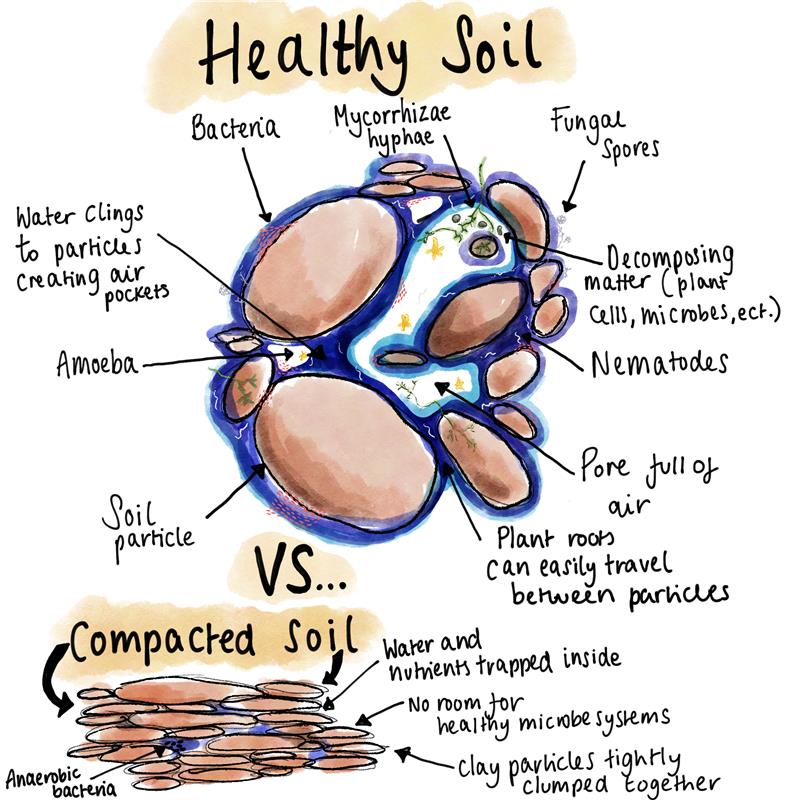
Although it’s not important to know the name of every microorganism which lives between soil pores, it is important to know that they all work together to keep a healthy ecosystem which is vital to soil health, and furthermore vital to plant health. It’s also important to consider that soil structure greatly influences the entire soil system.
Organic matter, depending on the type, can also directly provide nutrients for plants as it decomposes. Soils with very low organic matter content will need consistent additional organic matter added over time. For many gardens this can be a long process, but the payoff of healthy soil is endlessly valuable.
Although organic matter is crucial for the growth and development of most plants, gardeners must be mindful when using nutrient-rich organic matter in abundance. This is to avoid any leaching of nutrient rich liquid runoffs, which can contaminate nearby bodies of water, other gardens, agricultural land etc. Organic matter is in fact often the solution to avoid leaching; by using and incorporating a low nutrient type of matter, you will improve water and nutrient retention, limiting leaching.
To conclude, there’s a huge ecosystem in your soil which works together to keep each other alive. If the soil ecosystem is struggling, then so will your plants. Everything is connected, soil structure impacts water and nutrient availability and microbes, microbes impact nutrient availability, plants impact microbes… the list of interactions goes on! By adding organic matter, you’re helping to regulate the soil ecosystem and keep everything involved as healthy as possible.